

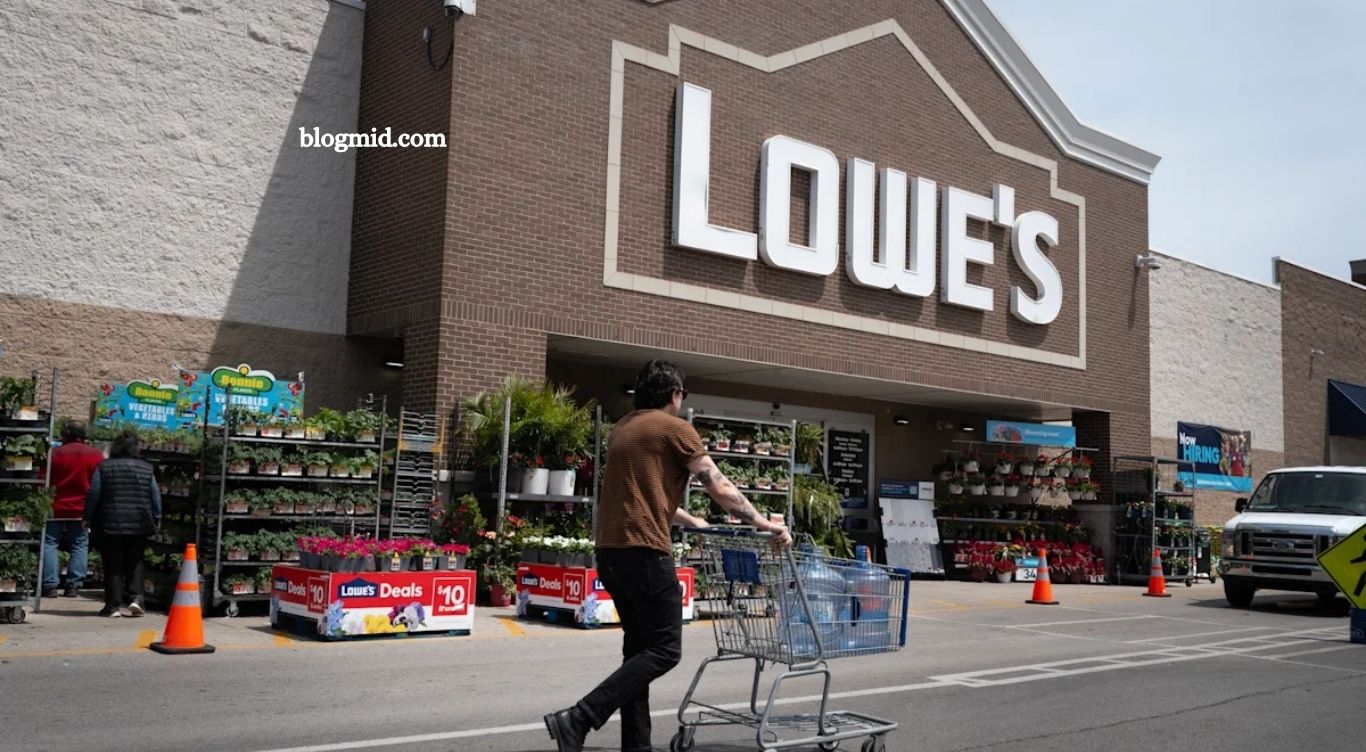
Lowe’s reported mixed quarterly results on Wednesday as the home improvement retailer faced continued pressure on consumer spending. While the company delivered stronger-than-expected adjusted earnings, revenue fell slightly short of Wall Street expectations, highlighting the challenges facing the home improvement sector.
The company maintained its full-year financial guidance but moved its expectations toward the lower end of its previous range. Lowe’s management said homeowners remain cautious about discretionary projects, with many customers delaying spending rather than choosing cheaper alternatives. The cautious consumer environment, combined with a slower housing market, continues to influence the company’s expectations for the remainder of the year.
Lowe’s Reports Mixed Second-Quarter Results
For the fiscal second quarter ended July 31, Lowe’s reported total sales of $25.96 billion, compared with $23.96 billion during the same period a year earlier. Although sales increased year over year, the figure came below Wall Street’s expectation of $26.16 billion.
Adjusted earnings per share reached $4.40, beating analysts’ estimate of $4.22. Lowe’s reported net income of approximately $2.4 billion, or $4.27 per share, which was roughly unchanged from the year-ago period.
Read More: California First State to Regulate Car Tire Squish
The company said tariff refund benefits contributed to its quarterly earnings. According to Lowe’s, tariff refunds added 11 cents to adjusted earnings per share, while CEO Marvin Ellison said the company received approximately $80 million in tariff refunds during the quarter.
The results demonstrate that Lowe’s continues to generate solid profitability despite a challenging environment for home improvement spending.
Company Lowers Outlook to Bottom End of Previous Range
Lowe’s did not formally reduce its full-year guidance range, but management moved its expectations to the bottom of its previous forecast.
The company now expects total annual sales of approximately $92 billion. Its previous guidance called for sales between $92 billion and $94 billion.
Lowe’s also expects comparable sales to remain flat for the full year. Previously, the company had expected comparable sales to range from flat to a 2% increase.
Adjusted earnings per share are now expected to reach approximately $12.25 for the year, compared with the previous forecast of $12.25 to $12.75.
The revised outlook reflects growing caution among homeowners and weaker discretionary spending. Management expects customers to remain selective with larger home improvement projects during the second half of the year.
Homeowners Remain Cautious With Spending
Lowe’s CEO Marvin Ellison said homeowners are watching their budgets closely. Instead of switching to lower-priced products, many consumers appear to be delaying projects altogether.
“The good news is that we’re not seeing these customers trade down,” Ellison said. “They’re just kind of on the sidelines.”
This behavior creates a difficult environment for retailers that depend on discretionary home improvement projects. Customers may continue purchasing essential maintenance products while postponing renovations, upgrades and larger remodeling projects.
Ellison expects this cautious behavior to continue through the second half of the year. However, he also said Lowe’s expects the housing market to gradually recover.
A recovery in housing activity could eventually encourage homeowners to spend more on renovations, repairs and improvement projects. Until that happens, Lowe’s appears focused on maintaining profitability while waiting for consumer confidence to strengthen.
Online Sales and Professional Business Remain Strong
Despite pressure among do-it-yourself customers, Lowe’s reported positive performance across several important areas.
Online sales increased 15.7% during the quarter. Digital growth remains an important part of Lowe’s broader strategy as consumers increasingly research and purchase home improvement products online.
The company also reported strong performance from its professional customer business and home services operations. Home installation services contributed to the company’s overall comparable-sales growth.
Comparable sales increased 0.2% during the quarter. Lowe’s credited strong performance in its professional business, online operations and home services for helping offset weaker conditions among DIY customers.
Ellison described the quarter as the company’s fifth consecutive period of positive comparable sales. He also highlighted the continued progress of Lowe’s broader “total home” strategy.
Competitive Pressure Increased in July
Lowe’s said it experienced heightened competitive pressure in July. Management believes some of that pressure came from competitors using tariff refund dollars to support pricing and drive sales.
Ellison said Lowe’s does not view the July weakness as a permanent shift in consumer behavior. Instead, he described the impact as temporary.
According to the CEO, some competitors used tariff-related refunds to support aggressive pricing strategies. Lowe’s chose not to follow that approach because management did not consider it financially prudent.
The company said it remains focused on delivering value while protecting profitability for shareholders.
Lowe’s Takes a Different Approach to Tariff Refunds
Tariff refunds played an important role in the quarter, providing Lowe’s with approximately $80 million in benefits.
Rather than immediately using the refunds to reduce prices aggressively, Lowe’s said it plans to consider how those funds can be shared with customers while maintaining healthy profitability.
Ellison explained that the company wants to avoid aggressive pricing actions that could weaken financial performance.
As additional tariff refunds arrive during the second half of the year, Lowe’s expects to evaluate ways to provide value to shoppers. This approach could include customer-focused initiatives while avoiding unnecessary pressure on margins.
Housing Market Continues to Weigh on Demand
The broader housing market remains one of the biggest challenges for home improvement retailers.
Higher borrowing costs, limited housing turnover and uncertainty around major purchases have contributed to a cautious environment. Homeowners may be less willing to take on expensive renovation projects when they remain uncertain about their financial outlook.
Lowe’s believes the housing market will gradually improve, but the timing remains uncertain.
Ellison said the company needs greater confidence among DIY customers before it can raise its financial outlook. Rather than focusing entirely on interest rates or housing turnover, he emphasized the importance of consumer confidence and discretionary spending.
For Lowe’s, stronger consumer confidence could be a key factor in unlocking demand for larger home improvement projects.
Home Depot Faces Similar Challenges
Lowe’s cautious outlook comes shortly after its major rival Home Depot reported its own quarterly results.
Home Depot said customers were still not returning to large-scale projects and described the housing market as remaining effectively frozen.
The similar comments from both major home improvement retailers suggest that industry challenges are broader than the performance of one company.
Consumers appear willing to maintain their homes and purchase essential products, but many are delaying costly renovations and discretionary upgrades.
This trend could continue until housing activity improves and consumers become more comfortable committing money to large projects.
Lowe’s Shares Rise Despite Cautious Forecast
Despite the cautious outlook, Lowe’s shares rose roughly 2% following the earnings announcement.
Investors may have responded positively to the company’s stronger-than-expected adjusted earnings, continued comparable-sales growth and strong online performance.
The company’s ability to maintain profitability while navigating weak discretionary demand could also provide some confidence to investors.
Lowe’s decision to preserve its financial guidance rather than make a major downward revision may have helped ease concerns surrounding the broader retail environment.
What Lowe’s Outlook Means for the Home Improvement Market
Lowe’s latest results highlight a complicated picture for the home improvement industry. Sales are growing, digital operations remain strong, and professional customers continue to provide support. However, cautious DIY shoppers and weak demand for major projects are limiting overall growth.
The company expects homeowners to remain careful with discretionary spending during the rest of the year. At the same time, management remains optimistic that the housing market will gradually recover.
Lowe’s strategy will likely depend on balancing customer value with profitability. The company must compete aggressively without allowing pricing decisions to damage margins.
If consumer confidence improves and housing activity begins to recover, demand for remodeling and renovation projects could strengthen. Until then, Lowe’s appears prepared to operate in a cautious environment while focusing on its strongest-performing business areas.
Frequently Asked Questions
What did Lowe’s report in its latest quarterly results?
Lowe’s reported $25.96 billion in sales and adjusted earnings of $4.40 per share.
Why did Lowe’s lower its outlook?
Lowe’s expects continued pressure from cautious consumers, weaker DIY spending, and a slower housing market.
What are Lowe’s full-year sales expectations?
Lowe’s now expects approximately $92 billion in full-year sales.
How did Lowe’s online sales perform?
Lowe’s online sales increased 15.7% during the quarter.
What is affecting home improvement spending?
Cautious consumer behavior, housing market weakness, and limited discretionary spending are affecting demand.
Did tariff refunds benefit Lowe’s earnings?
Yes. Tariff refunds added approximately 11 cents to Lowe’s adjusted earnings per share.
What does Lowe’s expect for the housing market?
Lowe’s expects the housing market to gradually recover, although the timing remains uncertain.
Conclusion
Lowe’s latest results highlight the challenges facing the home improvement market as cautious consumers continue delaying major projects. Although the company delivered stronger-than-expected adjusted earnings and recorded solid online, professional, and home services growth, weaker DIY spending remains a concern. Lowe’s expects customers to stay cautious through the second half of the year while anticipating a gradual housing market recovery.
