

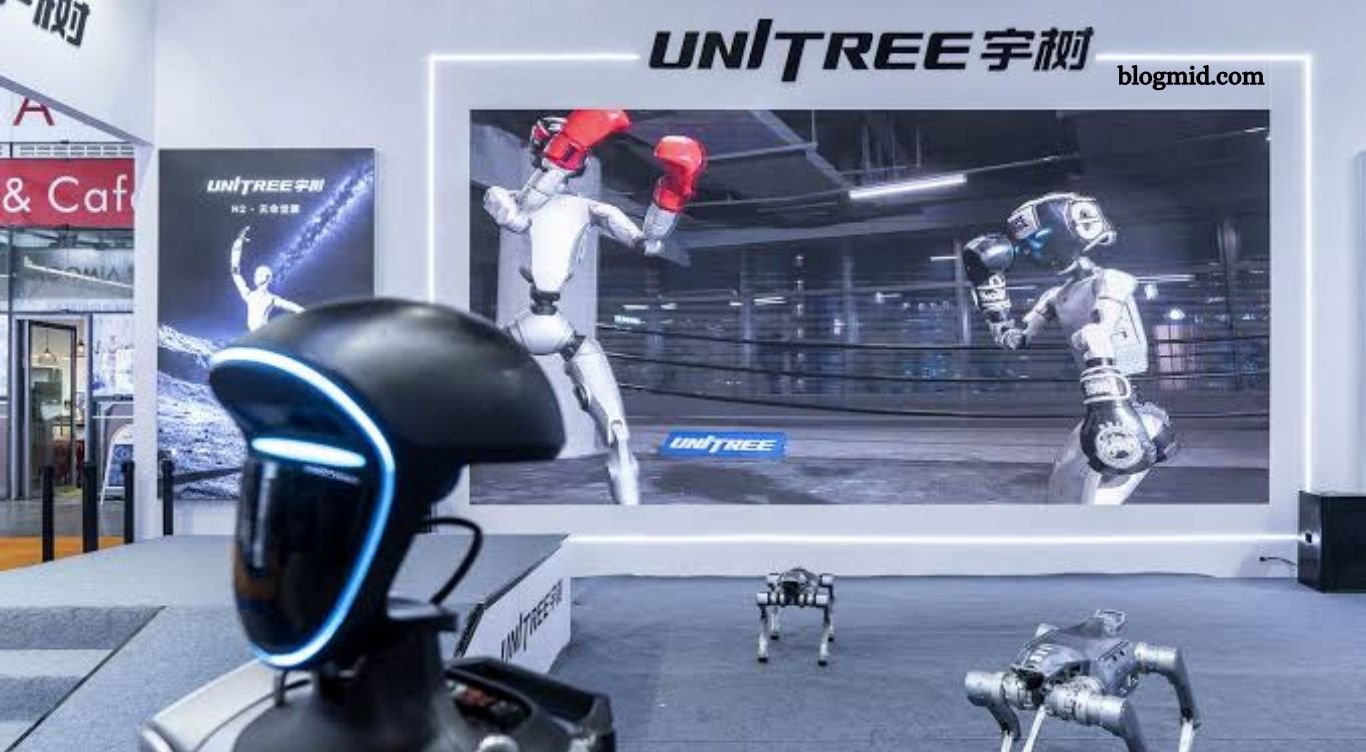
HONG KONG — China’s robotics industry has taken another major step into the global spotlight after Unitree Robotics delivered a spectacular stock market debut, highlighting growing investor enthusiasm for artificial intelligence, humanoid robots and advanced automation.
Unitree, the Hangzhou-based robotics company best known for its agile humanoid and quadruped robots, saw its shares surge dramatically after beginning trading on Shanghai’s STAR Market. The company’s strong debut reflects the growing belief among investors that robotics could become one of the next major growth areas of the global AI revolution.
The remarkable market performance also comes as China continues to strengthen its position in artificial intelligence and robotics while competing with the United States for leadership in advanced technology.
Unitree Shares Surge on First Trading Day
Unitree’s shares were initially priced at 150.8 yuan, equivalent to roughly $22 per share. By the end of Wednesday’s trading session, the stock had climbed to 845 yuan, or approximately $125.40.
That represented a gain of about 460% from its initial offering price. During the session, shares briefly reached 1,100 yuan, marking an increase of roughly 629%.
Read More: Lowe’s Issues Cautious Outlook Amid Pressure on Home Improvement Spending
The surge gave Unitree a market valuation of around $50 billion, an extraordinary figure for a robotics company whose commercial applications remain relatively limited compared with traditional technology manufacturers.
The debut also created enormous paper wealth for Unitree founder and CEO Wang Xingxing. With an ownership stake of roughly one-fifth of the company, Wang’s holdings were valued at more than $12 billion following the stock’s dramatic rise.
Unitree’s performance makes it the first humanoid robotics manufacturer to list on a mainland Chinese stock exchange, giving the company an important symbolic role in China’s rapidly developing robotics sector.
From Backflips to Advanced Humanoid Robotics
Unitree became internationally recognized for demonstrating robots capable of movements that once appeared limited to science fiction. Its machines can run, dance, perform backflips and demonstrate martial-arts-inspired movements.
The company has used these demonstrations to showcase advances in balance, movement, artificial intelligence and robotic control.

On Monday, Unitree introduced its latest “Superman” robot, which the company says can jump more than 6.5 feet into the air and reach speeds exceeding 28 miles per hour.
If those figures hold in practical conditions, the robot would be capable of moving faster than the average human and even faster than the 100-meter world-record pace associated with Usain Bolt.
Such demonstrations have helped generate global attention around Chinese robotics companies. They also illustrate how quickly robotic mobility has improved as companies combine artificial intelligence, sophisticated sensors, electric motors and advanced control systems.
China Pushes Robotics as a Strategic Industry
Unitree’s stock market debut comes at a significant moment for China’s technology industry.
Beijing has increasingly identified artificial intelligence, robotics and advanced manufacturing as strategic areas capable of supporting future economic growth. The country is investing heavily in technologies that could increase industrial productivity, automate repetitive tasks and create new high-tech industries.
China’s latest five-year economic planning framework places strong emphasis on advancing science and technology and targeting the frontiers of innovation.

The push is particularly important as China faces pressure to maintain economic growth. Economic expansion has slowed, increasing the importance of industries capable of generating new investment, exports and productivity.
Robotics could play an important role in that strategy. Humanoid machines have potential applications across manufacturing, logistics, healthcare, research, education and other industries.
However, widespread commercial adoption remains a significant challenge.
Unitree Is Already Profitable
One factor that separates Unitree from many technology startups is its profitability.
While numerous emerging robotics companies are still investing heavily in research and development without generating substantial profits, Unitree has already established a business selling robots to customers.

Its products have primarily been purchased by universities, research organizations and other institutions. These customers use robots for research, education, development and experimentation.
The current customer base demonstrates that demand for advanced robots already exists, but it also highlights the industry’s biggest question: Can humanoid robots move from research laboratories into large-scale commercial operations?
That transition could determine whether the enormous valuations being placed on robotics companies are justified.
Investors appear optimistic, but analysts continue to question how quickly demand will develop outside research and demonstration environments.
U.S. Restrictions Create New Challenges
Unitree’s impressive debut also comes alongside increasing restrictions on Chinese technology companies operating in the United States.
Washington recently moved to restrict imports of new foreign-made robots, citing national security concerns. Existing Unitree models can continue to be sold under the current restrictions, but the company’s access to the U.S. market faces significant limitations.
The United States accounted for approximately 13% of Unitree’s revenue last year, when the company generated about $250 million in total revenue, according to its IPO prospectus.
The company has also faced scrutiny from the U.S. government. In June, the U.S. Defense Department added Unitree to a list of Chinese military companies, describing the company as a contributor to China’s defense industrial base.
The designation does not impose direct sanctions on Unitree, but it prevents the U.S. military from contracting directly with the company.
Unitree has maintained that its robots are designed for civilian applications. China’s Humanoid Robot Industry Expands Rapidly
Unitree is not alone in pursuing the humanoid robotics opportunity.
Hundreds of Chinese companies displayed robotics products at the World Robot Conference in Beijing, demonstrating the scale of competition developing across the sector.
China has already established a strong manufacturing ecosystem for robotics, batteries, electric motors, sensors and other components. That industrial base could provide an advantage as humanoid robots become more sophisticated and production volumes increase.
Market research firm Omdia estimates that approximately 13,000 humanoid robots were shipped globally last year. Unitree and fellow Chinese robotics company AgiBot accounted for more than 70% of those shipments.
The figures demonstrate China’s growing influence in the emerging humanoid robotics market.
Investors Are Betting on the AI Supply Chain
Unitree’s blockbuster debut also reflects a broader investment trend surrounding China’s AI industry. Investors are increasingly looking beyond AI software companies and considering businesses involved across the entire technology supply chain.
Robotics represents one of the most visible areas of this expansion because humanoid machines combine artificial intelligence with physical hardware.
The trend was also evident in the blockbuster Shanghai listing of Chinese memory-chip manufacturer CXMT. Its shares surged 466% on their first trading day last month, briefly making it more valuable than Tencent among companies listed on a mainland Chinese exchange.
Together, the two IPOs demonstrate strong investor enthusiasm for companies connected to AI infrastructure and applications.
Memory chips provide critical infrastructure for data centers and AI systems, while robotics represents a potential physical application of increasingly capable AI models.
Unitree Becomes a Test for the Robotics Industry
Despite the excitement surrounding Unitree, analysts warn that the industry remains at an early stage.
Lian Jye Su, chief analyst at Omdia, described Unitree’s IPO as an important benchmark for the humanoid robotics industry. Investors will closely watch the company as other Chinese robotics manufacturers prepare to enter public markets. The biggest question is whether the current enthusiasm translates into sustainable commercial demand.
Humanoid robots remain expensive and technically challenging. Companies must improve reliability, battery life, safety, software capabilities and manufacturing costs before these machines can become common in workplaces and homes.
Unitree’s existing profitability provides an encouraging foundation, but its current reliance on universities and research institutions means the company still has considerable room to expand.
What Unitree’s IPO Means for the Future
Unitree’s extraordinary stock market debut represents more than a successful IPO. It reflects the growing importance of robotics within China’s broader artificial intelligence strategy.
The company has captured public attention through robots capable of remarkable physical movements, but the next stage will depend on practical applications and sustainable demand.
If Unitree and its competitors can successfully transform experimental humanoid robots into useful commercial machines, the robotics industry could become one of the most important beneficiaries of the AI boom.
For now, Unitree’s 460% first-day gain sends a powerful message about investor expectations. The market is betting that China’s advances in AI, manufacturing and robotics can create a new generation of technology leaders.
Frequently Asked Questions
What is Unitree Robotics?
Unitree Robotics is a Chinese company developing humanoid and quadruped robots for research, education, and commercial applications.
Why did Unitree shares surge after its IPO?
Strong investor enthusiasm for AI and robotics pushed Unitree shares sharply higher during their stock market debut.
What robots is Unitree known for?
Unitree is known for agile humanoid and quadruped robots capable of running, dancing, jumping, backflips, and martial-arts movements.
Where is Unitree listed?
Unitree is listed on Shanghai’s technology-focused STAR Market, making it the first mainland-listed humanoid robotics maker.
Is Unitree profitable?
Yes. Unlike many emerging robotics companies, Unitree has reported profitability, although much of its business serves research institutions.
Does Unitree operate in the U.S.?
Unitree has sold products in the U.S., but increasing American restrictions are limiting its access to the market.
What does Unitree’s IPO mean for robotics?
The blockbuster debut could make Unitree a key benchmark for investor confidence and future demand across the humanoid robotics industry.
Conclusion
Unitree Robotics’ blockbuster stock market debut highlights the growing excitement surrounding artificial intelligence and humanoid robotics in China. The company’s remarkable share-price surge reflects strong investor confidence in the future of advanced robotics, while its rapid technological progress demonstrates China’s expanding capabilities in the sector.
