

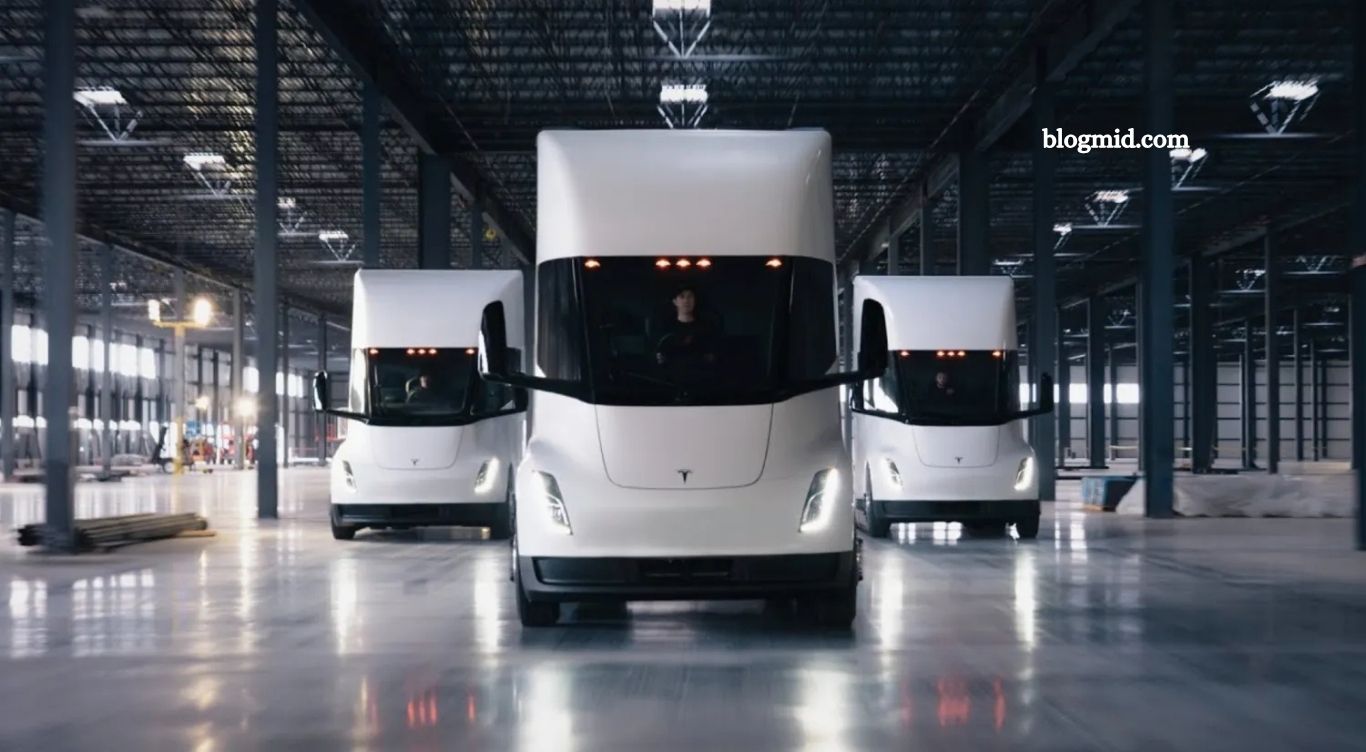
Swedish freight technology company Einride is preparing to deploy 500 Tesla Semi electric trucks across the United States in what is reportedly the largest publicly announced commitment to Tesla’s electric heavy-duty truck so far. The major order represents a significant expansion of Einride’s electric fleet and could accelerate the adoption of battery-powered freight transportation on major US routes.
The first Tesla Semis are expected to arrive next month, with the remaining trucks scheduled for phased delivery over the following 24 months. Once the deployment is complete, Einride’s electric fleet could grow from roughly 250 vehicles to approximately 750, marking a major step forward for the company’s electrification strategy.
Einride’s Largest Tesla Semi Commitment Yet
Einride announced the Tesla Semi commitment alongside its first-half 2026 financial results. The deployment will cover five US states: California, Texas, New Jersey, Illinois, and Georgia. Amazon is the named customer for the deployment, giving the project an important commercial foundation.
The trucks will be managed through Einride’s Saga software platform, which handles freight routing and charging schedules. This technology will allow the company to coordinate truck movements and charging windows more efficiently as the electric fleet expands across different regions.
Read More: Bessent Steps In to Calm Bond Markets as Borrowing Costs Rise
The size of the agreement sets it apart from previous publicly announced Tesla Semi commitments. In May, WattEV announced an order for 370 Tesla Semis intended for port drayage operations in California. Einride’s new order exceeds that figure by 130 trucks, making it the largest publicly announced Tesla Semi commitment so far.
“This deployment is yet another proof point that we can execute at the scale our customers demand,” Einride CEO Roozbeh Charli said. Tesla’s Director of Semi, Dan Priestley, also emphasized the potential economic advantages of electric heavy trucks, including lower fuel and maintenance costs and improved vehicle uptime compared with diesel trucks.
Amazon Becomes a Major Customer
Amazon’s involvement adds significant importance to the deployment because of the company’s enormous logistics network. Amazon operates transportation routes between fulfillment centers, warehouses, ports, and distribution facilities throughout the United States, creating opportunities for electric trucks to operate on predictable and heavily used routes.
The 500 Tesla Semis will provide a large-scale test of electric trucking under real commercial conditions. Instead of operating as a small demonstration project, the deployment will involve hundreds of vehicles working within a major freight network.
Einride’s Saga software will play an important role in managing these operations. The platform can help coordinate routes and charging schedules, allowing the company to align energy usage with freight requirements. Effective software management becomes increasingly important as electric fleets grow because charging delays can directly affect truck utilization and delivery schedules.
The Financial Scale of the Tesla Semi Order
The size of the Tesla Semi commitment also raises questions about the financing behind the deployment. Tesla has quoted prices of approximately $290,000 for the 500-mile Long Range Semi and around $260,000 for the Standard Range model.
At those prices, 500 trucks could represent a hardware value of approximately $130 million to $145 million. Additional expenses could include charging infrastructure, maintenance, software, insurance, and other operational costs.
Einride reported approximately SEK 748 million in cash at the end of June, equivalent to about $77 million based on the figures provided. The company says the Tesla Semi deployment will be fully financed through third-party financing solutions.
Einride has not disclosed the lender or detailed financing terms. Third-party financing is common in commercial transportation because Class 8 trucks represent major capital investments. Financing can allow fleet operators to deploy vehicles without paying the entire purchase price upfront.
However, the lack of detailed financing information means investors will likely continue watching how the arrangement affects Einride’s financial obligations and balance sheet as the trucks enter service.
Understanding Einride’s $800 Million Opportunity
Einride has also referenced approximately $800 million in potential long-term annual recurring revenue connected to joint business plans. While the number is substantial, it should not be interpreted as guaranteed revenue or confirmed backlog.
The company’s first-half report also identifies the $800 million figure as potential annual recurring revenue from joint business plans that still need to be converted into active business. This distinction is important when assessing Einride’s financial performance.
During the first half of 2026, Einride generated approximately $27 million in revenue, representing 26% growth in constant currency. Its adjusted EBITDA remained negative at SEK 363 million.
The large Tesla Semi deployment could create additional commercial opportunities for Einride, but the company must still convert potential agreements into actual revenue while controlling the costs involved in expanding its electric transportation operations.
Tesla Expands Semi Production
The agreement comes at an important time for Tesla as the company increases production of the Semi. Tesla’s dedicated Semi manufacturing facility near Gigafactory Nevada has been designed for annual production capacity of up to 50,000 trucks.
High-volume production began ramping in April, creating the potential for Tesla to deliver significantly more electric heavy-duty trucks than it has in previous years. Production estimates for 2026 have varied considerably, reflecting uncertainty around the speed of the manufacturing ramp.
A 500-truck commitment from a single customer could provide Tesla with an important anchor deployment. Large, concentrated fleets can make charging infrastructure easier to plan because trucks can operate repeatedly along predictable freight corridors.
This approach can be more practical than deploying small numbers of electric trucks across widely separated locations. Concentrated routes allow companies to focus charging investments around major warehouses, distribution centers, ports, and other freight hubs.
Charging Infrastructure Remains Essential
Electric trucks require more than advanced batteries to operate effectively. Charging infrastructure remains one of the biggest challenges for large-scale commercial electrification.
A fleet of 500 Tesla Semis will require substantial charging capacity, particularly if the vehicles operate on demanding schedules. Einride’s software can help coordinate charging windows with delivery schedules, loading activities, and vehicle availability.
For freight operators, charging needs to become part of the normal transportation process rather than creating significant additional downtime. Trucks could potentially charge during loading, unloading, scheduled breaks, or overnight periods depending on their routes.
The Einride deployment could therefore become an important real-world example of how electric trucks, charging infrastructure, and fleet-management software can work together at commercial scale.
Tesla and Einride Share an Autonomous Vision
The partnership is also notable because both companies have explored autonomous transportation. Einride became widely known for its work with cab-less autonomous electric freight vehicles, while Tesla has developed the Semi with future autonomous driving capabilities in mind.
Tesla CEO Elon Musk has indicated that autonomous driving technology for the Semi could arrive within a relatively short timeframe. If autonomous trucking develops alongside the electric fleet, Einride could eventually combine Tesla’s vehicle technology with its own software and freight-management systems.
This approach fits Einride’s broader strategy of providing the intelligence and operational layer on top of vehicle hardware. Instead of manufacturing every part of the transportation system, the company can use software to manage routing, charging, fleet operations, and freight movements.
A Major Test for Electric Trucking
Einride’s 500 Tesla Semi deployment represents a major milestone for electric freight transportation in the United States. The project combines a large commercial customer, hundreds of electric trucks, multiple states, dedicated charging requirements, and centralized fleet-management software.
The deployment will provide valuable information about the real-world performance of electric Class 8 trucks. Operating costs, charging efficiency, vehicle uptime, range, maintenance requirements, and freight productivity will all help determine whether electric trucks can compete with diesel vehicles at scale.
Frequently Asked Questions
How many Tesla Semis is Einride ordering?
Einride is deploying 500 Tesla Semis across the United States.
Which company will use Einride’s Tesla Semis?
Amazon is the named customer for the electric truck deployment.
Which US states will receive the Tesla Semis?
The trucks will operate across California, Texas, New Jersey, Illinois, and Georgia.
When will the Tesla Semi deliveries begin?
The first deliveries are expected to begin next month, with remaining trucks arriving over 24 months.
How much could 500 Tesla Semis cost?
The estimated truck hardware cost could range from $130 million to $145 million.
How will Einride manage the electric trucks?
Einride will use its Saga software platform to manage routing and charging schedules.
Why is the order significant for Tesla?
It represents the largest publicly announced Tesla Semi commitment and supports Tesla’s expanding electric truck production.
Conclusion
Einride’s 500 Tesla Semi deployment marks a major milestone for electric freight transportation in the United States. With Amazon as the named customer, operations across five states, and phased deliveries over 24 months, the project could demonstrate the potential of large-scale electric trucking while giving Tesla an important commercial boost.
