

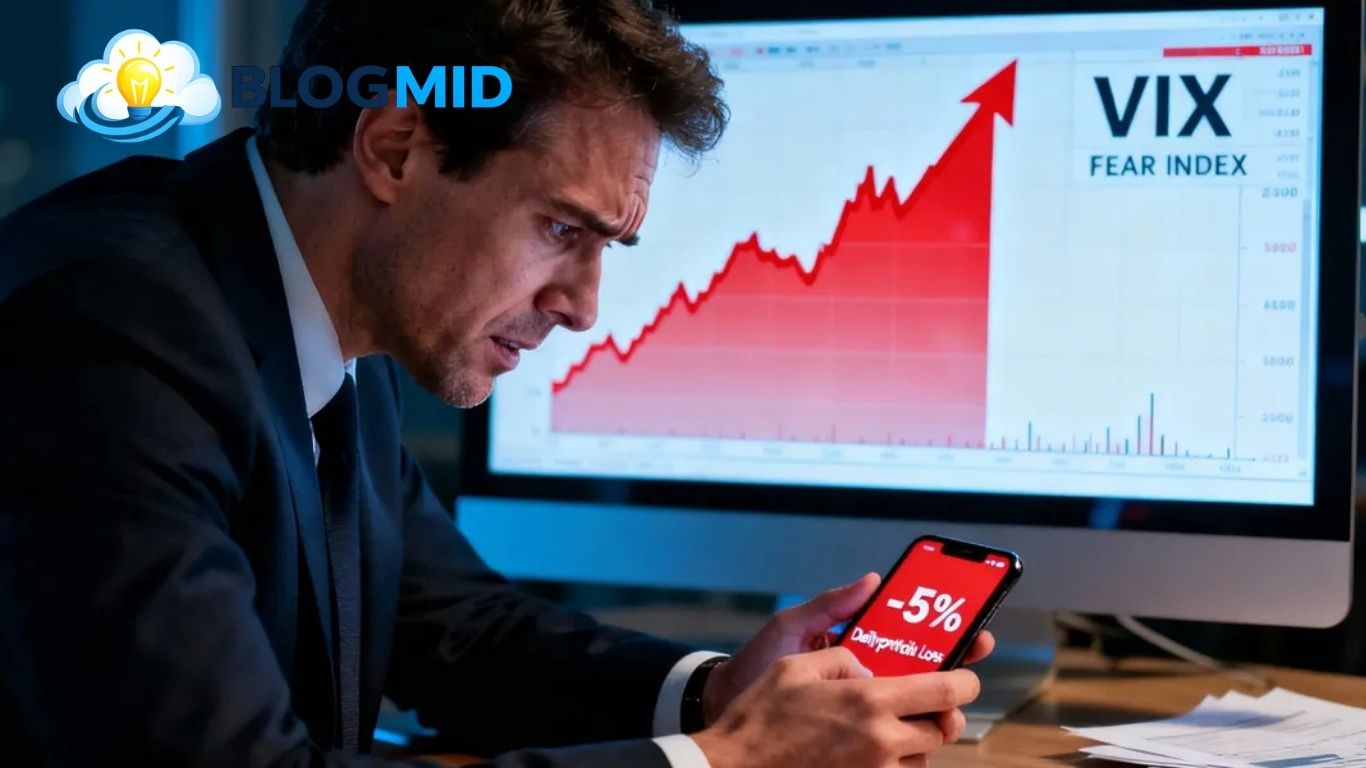
Market volatility is one of the most important concepts investors need to understand when participating in financial markets. Whether you invest in stocks, bonds, mutual funds, exchange-traded funds (ETFs), or other assets, prices rarely move in a perfectly straight line. Markets can rise quickly, decline sharply, or fluctuate significantly within a short period.
For some investors, market volatility creates fear and uncertainty. For others, it can create opportunities to buy quality investments at attractive prices. Understanding why markets become volatile and how to respond can help investors make more informed and disciplined decisions.
What Is Market Volatility?
Market volatility refers to the frequency and size of price movements in financial markets over a particular period. When asset prices experience large and rapid changes, the market is considered highly volatile. When prices move within a relatively narrow range, volatility is generally lower.
Volatility can affect individual stocks, entire market indexes, currencies, commodities, and other financial assets. It is often viewed as a measure of uncertainty and risk, although volatility itself does not necessarily mean that an investment is fundamentally risky.
For example, a stock may experience a temporary price decline because of negative market sentiment even though the company’s long-term financial performance remains strong. Similarly, a market can rise sharply when investors become more optimistic about economic growth.
Does Market Volatility Happen?
Several factors can contribute to market volatility. Understanding these factors can help investors put sudden market movements into perspective.
Economic Changes
Economic conditions have a significant influence on financial markets. Changes in inflation, employment, economic growth, consumer spending, and interest rates can affect investor expectations.For instance, higher-than-expected inflation may cause investors to worry about rising interest rates and weaker economic growth. This can lead to selling pressure across stock markets.On the other hand, stronger economic data can increase confidence and encourage investors to purchase riskier assets.
Interest Rate Decisions
Central banks play an important role in financial market movements. When interest rates rise, borrowing becomes more expensive for consumers and businesses. Higher rates can also make interest-bearing investments more attractive compared with certain stocks.
When central banks lower interest rates, borrowing may become cheaper, potentially supporting economic activity and corporate investment.Because interest-rate expectations can change quickly, central bank announcements often lead to increased market volatility.
Geopolitical Events
Political conflicts, international tensions, elections, trade disputes, and major diplomatic developments can influence investor confidence.Markets generally dislike uncertainty. When investors cannot easily predict how a geopolitical event will affect economic growth, trade, energy prices, or corporate profits, they may reduce risk exposure. This can result in rapid price movements.
Corporate Earnings
Individual companies can experience volatility when they report quarterly or annual financial results.If a company’s earnings, revenue, or future guidance is better than expected, its stock price may rise. If results disappoint investors, the stock may fall sharply.Technology companies, growth stocks, and businesses with high valuations can sometimes experience particularly large price movements when earnings expectations change.
Investor Psychology
Investor emotions are another major driver of market volatility. Fear and greed can influence decision-making, especially during periods of uncertainty.When markets begin falling, some investors may sell because they are worried about further losses. This selling can create additional downward pressure. Similarly, strong market gains can encourage investors to buy because they fear missing out.This cycle of emotional buying and selling can increase short-term volatility.
How Market Volatility Affects Investors
Market volatility affects investors differently depending on their goals, investment horizon, and risk tolerance.
Short-Term Investors
Investors with short-term goals may be more exposed to the effects of market volatility. If they need to sell an investment during a market decline, they may have to accept a loss.For this reason, money needed for near-term expenses is generally better suited to investments that are less exposed to significant price fluctuations.
Long-Term Investors
Long-term investors may have more flexibility during periods of volatility. A temporary market decline may have less impact on someone investing for retirement or another long-term objective if they do not need to sell immediately.
Historically, financial markets have experienced numerous periods of sharp declines followed by periods of recovery. However, past performance does not guarantee future results, and investors should still consider their individual risk tolerance.
Diversified Investors
Investors who spread their money across different asset classes, sectors, regions, and securities may reduce the impact of volatility in any single investment.Diversification cannot eliminate investment risk, but it can help prevent one poorly performing asset from having an overwhelming effect on an entire portfolio.
Volatility Does Not Always Mean Something Is Wrong
One of the most important lessons for investors is that volatility is a normal part of financial markets.Markets respond continuously to new information. Economic reports, corporate announcements, interest-rate expectations, political developments, and changes in investor sentiment can all affect prices.
A market decline does not automatically mean that an investment’s underlying value has disappeared. Likewise, a rapidly rising market does not necessarily mean that every investment is becoming fundamentally more valuable.Investors should distinguish between short-term price movements and long-term investment fundamentals.
The Importance of Understanding Your Risk Tolerance
Risk tolerance refers to how comfortable an investor is with the possibility of losing money or experiencing fluctuations in portfolio value.Some investors may be comfortable with significant short-term price movements in exchange for potentially higher long-term returns. Others may prefer more stable investments, even if that means accepting potentially lower returns.
Understanding risk tolerance can help investors build a portfolio that they are more likely to maintain during difficult market conditions.A portfolio that looks attractive during a strong bull market may become difficult to hold when prices decline. Investors should therefore consider not only their financial goals but also their ability to remain disciplined during periods of uncertainty.
Strategies for Managing Market Volatility
Investors cannot control market volatility, but they can control how they respond to it.
Maintain a Diversified Portfolio
Diversification is one of the most commonly used strategies for managing investment risk.Rather than concentrating money in one company, sector, or asset class, investors can consider spreading investments across different areas of the market.The right level of diversification depends on individual financial circumstances, objectives, and risk tolerance.
Focus on Long-Term Goals
Short-term market movements can become less distracting when investors have clearly defined long-term objectives.Instead of reacting to every daily price change, investors can evaluate whether their current portfolio remains aligned with their investment plan.Long-term thinking can also help reduce emotional decisions during periods of market stress.
Avoid Emotional Investing
Fear and excitement can lead investors to make decisions they later regret.Selling investments during a panic can lock in losses, while buying assets simply because prices are rising can expose investors to excessive risk.Creating an investment strategy before market turbulence occurs can make it easier to follow a plan when emotions are high.
Consider Dollar-Cost Averaging
Dollar-cost averaging involves investing a predetermined amount at regular intervals rather than attempting to predict the perfect time to enter the market.When prices are lower, the same amount of money can purchase more shares. When prices are higher, it purchases fewer shares.This approach does not guarantee profits or eliminate losses, but it can reduce the pressure of trying to time the market.
Keep an Emergency Fund
Investors may be more likely to sell investments during a market downturn if they need money for unexpected expenses.Maintaining an appropriate emergency fund can provide financial flexibility and reduce the need to sell long-term investments at unfavorable prices.
Review Your Portfolio Regularly
Investors should periodically review their portfolios to ensure that their asset allocation still matches their goals and risk tolerance.Reviewing a portfolio does not mean reacting to every daily market movement. A structured review process can help investors identify whether meaningful changes are necessary.
Market Volatility and Investment Opportunities
Although volatility can increase risk, it can also create opportunities.When markets decline, some high-quality companies may trade at lower valuations than before. Investors with a long-term perspective and sufficient financial flexibility may view market corrections as opportunities to add to existing positions.
However, falling prices do not automatically mean that an investment is undervalued. Investors should research a company’s financial health, competitive position, earnings prospects, valuation, and broader industry conditions before making investment decisions.Trying to predict the exact market bottom can also be extremely difficult. A disciplined investment strategy is generally more practical than attempting to consistently time market movements.
How Investors Can Prepare for Future Volatility
Market volatility cannot be predicted perfectly, but investors can prepare for it.A strong investment plan should include clear financial goals, an appropriate asset allocation, sufficient liquidity, and a realistic understanding of risk.
Investors should also understand why they own each major investment in their portfolio. Knowing the purpose of an investment can make it easier to remain disciplined when markets become unpredictable.Regular portfolio reviews, ongoing financial education, and careful risk management can also help investors navigate changing market conditions.
Frequently Asked Questions
What is market volatility?
Market volatility refers to how quickly and significantly investment prices rise or fall over a specific period.
What causes market volatility?
Market volatility can be caused by economic changes, interest rates, inflation, geopolitical events, company earnings, and investor sentiment.
Is market volatility good or bad for investors?
Market volatility can create risks, but it may also provide opportunities to buy quality investments at lower prices.
How can investors manage market volatility?
Investors can manage volatility through diversification, long-term planning, appropriate asset allocation, and avoiding emotional investment decisions.
Should I sell investments during market volatility?
Not necessarily. Investors should consider their financial goals, risk tolerance, and investment timeframe before making decisions during market declines.
Conclusion
Understanding market volatility is essential for making informed investment decisions. While market fluctuations can create uncertainty and short-term losses, they are a normal part of investing. By maintaining a diversified portfolio, understanding risk tolerance, avoiding emotional decisions, and focusing on long-term financial goals, investors can navigate volatile markets more confidently. Instead of reacting to every market movement, a disciplined and well-planned investment strategy can help investors manage risk and take advantage of potential opportunities over time.
