

Technology continues to evolve at an extraordinary pace, transforming the way people work, communicate, shop, learn, and manage businesses. As organizations become more dependent on digital tools, emerging technologies are moving from experimental concepts into practical solutions that can create measurable value.
From artificial intelligence and autonomous systems to cybersecurity, quantum computing, and advanced connectivity, several innovations could have a major influence on the digital landscape in 2026. Understanding these developments can help businesses, professionals, and consumers prepare for the opportunities and challenges ahead.
Artificial Intelligence Becomes More Autonomous
Artificial intelligence is expected to remain one of the most influential technology trends in 2026. However, the focus is shifting beyond basic chatbots and content-generation tools toward AI systems capable of completing tasks with greater independence.
AI agents can potentially plan workflows, analyze information, make recommendations, interact with software, and complete multi-step tasks with limited human intervention. Businesses may use these systems for customer service, research, sales support, data analysis, software development, and administrative work.
The growing adoption of AI will also increase demand for responsible AI practices. Companies will need to pay attention to accuracy, privacy, security, transparency, and human oversight when deploying autonomous AI systems.
Generative AI Moves Into Everyday Business Operations
Generative AI has already changed content creation, but its role in business could become much broader in 2026. Instead of being used only for writing or image generation, generative AI can become part of everyday workflows.Companies may use AI to summarize meetings, prepare reports, analyze documents, generate marketing materials, assist employees, personalize customer experiences, and support decision-making.
The most successful organizations are unlikely to rely on AI simply because it is popular. Instead, they will focus on identifying specific business problems where AI can improve productivity, reduce costs, or enhance customer service.
AI-Powered Cybersecurity
As businesses adopt more AI and cloud-based technologies, cybersecurity threats are also becoming increasingly sophisticated. This is likely to make AI-powered cybersecurity an important technology trend in 2026.
Machine learning systems can analyze large amounts of security data and identify unusual patterns that might indicate a cyberattack. AI can help organizations detect suspicious activity, prioritize threats, monitor networks, and respond to security incidents more quickly.
At the same time, cybercriminals can also use AI to create more convincing phishing messages, automate attacks, and identify vulnerabilities. This creates an ongoing competition between defensive and offensive uses of artificial intelligence.For businesses, investing in modern cybersecurity will be increasingly important as digital operations expand.
Edge Computing Gains Greater Importance
Cloud computing has become essential for modern businesses, but not every application can depend entirely on distant data centers. Edge computing addresses this challenge by processing data closer to where it is generated.
This approach can reduce latency and improve performance for applications that require rapid responses. Industries such as manufacturing, healthcare, transportation, retail, and telecommunications can benefit from edge computing.
The combination of edge computing, artificial intelligence, and Internet of Things (IoT) devices could enable smarter systems that analyze information in real time without always sending massive amounts of data to centralized servers.
The Internet of Things Becomes More Intelligent
The Internet of Things is expected to continue expanding as connected devices become more capable and affordable. Smart homes, connected vehicles, industrial equipment, wearable devices, and intelligent infrastructure are all contributing to the growth of IoT.the biggest development may not simply be the number of connected devices but their ability to understand and respond to data.
AI-powered IoT systems can potentially predict equipment failures, optimize energy consumption, monitor environmental conditions, and automate routine processes. Businesses can use these capabilities to improve efficiency and reduce operational costs.
5G and Advanced Connectivity
Fast and reliable connectivity is becoming a foundation for many emerging technologies. The continued expansion of 5G networks can support applications that require high bandwidth, low latency, and reliable connections.Smart factories, autonomous vehicles, augmented reality, remote operations, and connected devices can all benefit from advanced wireless networks.
As connectivity improves, businesses may also find new ways to deliver digital services to customers in real time. Faster networks could therefore play an important supporting role in the development of AI, IoT, edge computing, and immersive technologies.
Quantum Computing Moves Closer to Practical Applications
Quantum computing remains an emerging field, but its potential makes it one of the most closely watched technology trends for 2026 and beyond.Unlike traditional computers, quantum computers use quantum principles to process certain types of problems in fundamentally different ways. Although widespread commercial quantum computing is still developing, researchers and technology companies continue working on applications involving optimization, materials science, drug discovery, financial modeling, and cryptography.
The technology is unlikely to replace conventional computers in everyday tasks. Instead, quantum systems could eventually work alongside traditional computing infrastructure to solve specialized problems that are extremely difficult for classical computers.
Robotics and Autonomous Systems Expand
Robotics is moving beyond traditional industrial machines. Advances in AI, sensors, computer vision, and machine learning are helping robots become more adaptable and capable of operating in complex environments.
In manufacturing, robots can perform repetitive and precision-based tasks. In warehouses, autonomous systems can move inventory and improve logistics. Service robots may also become more common in areas such as hospitality, healthcare, and customer support.
The growth of robotics does not necessarily mean that human workers will become unnecessary. Instead, businesses may increasingly use robots to handle repetitive, dangerous, or physically demanding activities while employees focus on tasks requiring creativity, judgment, and interpersonal skills.
Extended Reality and Spatial Computing
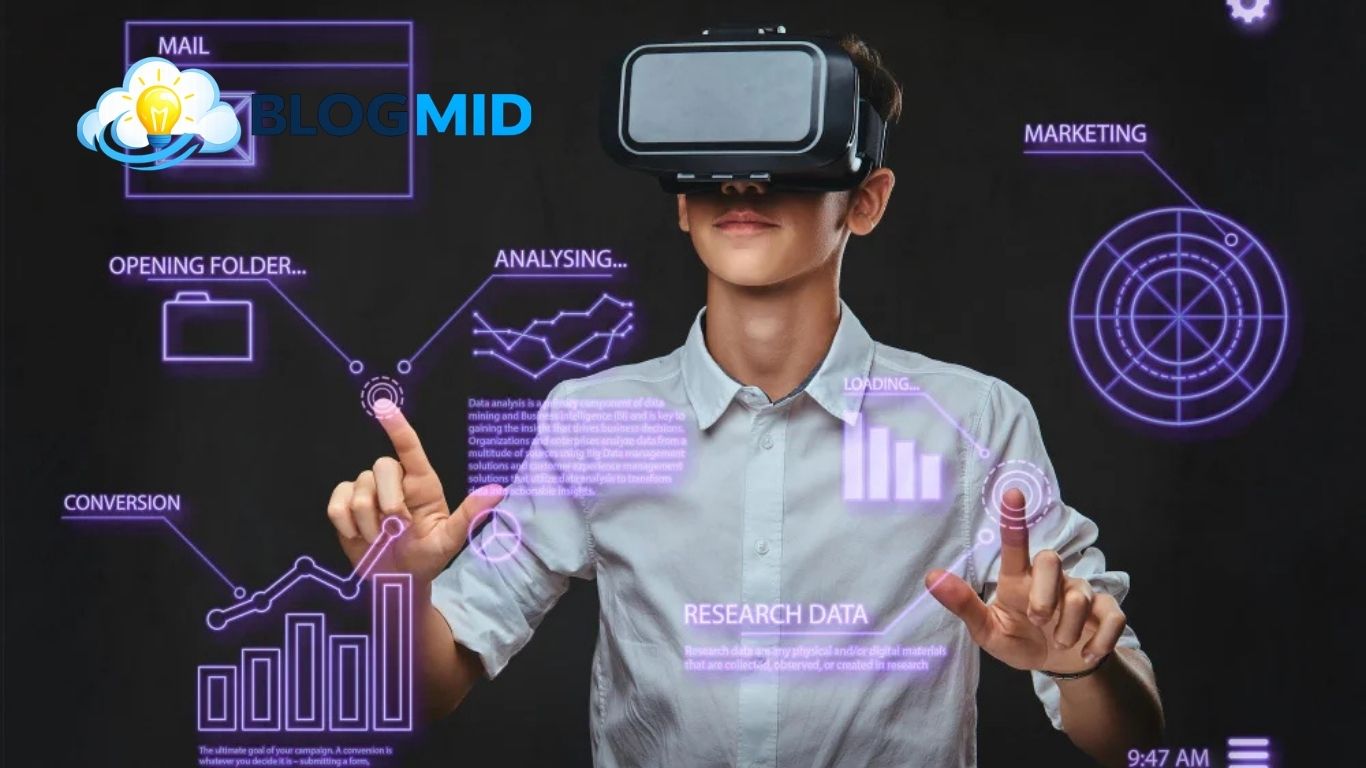
Virtual reality (VR), augmented reality (AR), and mixed reality (MR) are creating new ways for people to interact with digital information. Collectively, these technologies are often associated with extended reality and spatial computing.
In 2026, their applications could extend beyond entertainment. Businesses may use immersive technologies for employee training, product demonstrations, remote collaboration, education, design, healthcare, and industrial maintenance.technicians could use augmented reality to receive step-by-step instructions while working on equipment. Students could explore interactive virtual environments instead of relying entirely on traditional textbooks.As hardware becomes more comfortable and software improves, spatial computing could become an increasingly practical business technology.
Cloud Computing Becomes More Flexible
Cloud computing will remain a core part of digital infrastructure, but organizations are increasingly looking for flexible approaches to managing workloads.Hybrid cloud and multicloud strategies allow businesses to use different environments based on performance, security, cost, and operational requirements. Cloud-native applications are also becoming increasingly important as companies modernize their technology infrastructure.
Another emerging concept is serverless computing, which allows developers to run applications without directly managing traditional server infrastructure.businesses are likely to focus less on simply moving everything to the cloud and more on building efficient, secure, and cost-effective cloud environments.
Sustainable Technology and Green Computing
Environmental concerns are influencing technology decisions across industries. Data centers, AI systems, connected devices, and other digital infrastructure can require significant amounts of electricity and resources.As a result, green technology and sustainable computing could become increasingly important in 2026.
Businesses may invest in energy-efficient hardware, renewable energy, smarter cooling systems, efficient data centers, and software designed to reduce unnecessary computing workloads.Sustainability may also become a competitive advantage. Companies that reduce energy consumption and technology waste can potentially lower operating costs while improving their environmental performance.
Digital Twins Transform Business and Industry
Digital twins are virtual representations of physical objects, systems, or environments. They allow organizations to monitor and analyze real-world operations through digital models.
Manufacturers can use digital twins to simulate production processes, identify potential problems, and optimize equipment performance. Cities can use them to model infrastructure and traffic patterns, while energy companies can analyze complex systems.
When combined with IoT sensors, AI, and cloud computing, digital twins can provide organizations with powerful tools for prediction and optimization.
Privacy-Enhancing Technologies Gain Attention
As digital services collect increasing amounts of information, privacy is becoming a major concern for consumers and organizations.Privacy-enhancing technologies can help businesses use data while reducing unnecessary exposure of sensitive information. Techniques such as encryption, anonymization, secure computation, and privacy-focused data processing may become more important as data regulations and consumer expectations evolve.Companies that treat privacy as a core part of technology strategy can build greater trust with customers while reducing potential security and compliance risks.
Human-AI Collaboration Becomes the New Workplace Model
One of the most important technology trends shaping 2026 may be the increasing collaboration between humans and AI.Rather than viewing AI only as a replacement for human workers, organizations are exploring how technology can augment human capabilities. AI can handle repetitive tasks, analyze large datasets, and provide recommendations, while people contribute creativity, critical thinking, leadership, empathy, and strategic judgment.This shift will also increase the importance of digital skills. Employees who understand how to use AI tools effectively may have an advantage in an increasingly technology-driven workplace.
How These Technology Trends Could Impact Businesses
The technology trends shaping 2026 are not isolated from one another. Their greatest impact may come from how they work together.AI can analyze data generated by IoT devices, edge computing can process that information quickly, cloud platforms can provide scalable infrastructure, and advanced connectivity can connect devices across locations.
Businesses that successfully combine these technologies can potentially improve productivity, customer experience, security, and operational efficiency.adopting every new technology is not necessarily the right strategy. Organizations should evaluate their goals, budget, workforce capabilities, cybersecurity requirements, and expected return on investment before making major technology decisions.
How to Prepare for Technology Trends in 2026
Businesses and professionals can take several practical steps to prepare for emerging technologies.identify technologies that directly support specific business objectives. Second, invest in employee training so teams can adapt to new digital tools. Third, strengthen cybersecurity and data protection practices. Finally, test emerging technologies through small pilot projects before making large-scale investments.developing skills in AI, data analysis, cybersecurity, cloud computing, automation, and digital communication can help improve career opportunities in a changing technology environment.
Frequently Asked Questions
What are the top technology trends that could shape 2026?
Key technology trends include artificial intelligence, AI-powered cybersecurity, edge computing, IoT, advanced connectivity, robotics, quantum computing, spatial computing, and sustainable technology.
How will AI influence technology in 2026?
AI is expected to become more autonomous and integrated into everyday business operations, helping organizations automate tasks, analyze data, improve productivity, and deliver personalized customer experiences.
Will cybersecurity become more important in 2026?
Yes. As businesses increasingly rely on AI, cloud platforms, and connected devices, advanced cybersecurity will be essential for detecting threats, protecting sensitive data, and preventing cyberattacks.
What role will IoT play in 2026?
IoT will continue connecting smart devices, vehicles, industrial equipment, and infrastructure. Combined with AI and edge computing, IoT can enable real-time monitoring, automation, and predictive maintenance.
Could quantum computing become important in 2026?
Quantum computing may move closer to practical applications in areas such as drug discovery, optimization, materials research, and cryptography, although widespread everyday use is still developing.
Conclusion
The top technology trends that could shape 2026 point toward a future that is more intelligent, connected, automated, and data-driven. Artificial intelligence, autonomous systems, cybersecurity, edge computing, IoT, quantum computing, robotics, spatial computing, and sustainable technology are all likely to influence how businesses and individuals interact with technology.The most important lesson is that technology itself is only part of the equation. Organizations that combine innovation with responsible implementation, skilled employees, strong cybersecurity, and clear business goals will be better positioned to benefit from emerging opportunities.
